
ICSMV 2026
Professor Ying-Hao Chu
- General Information
- Symposia
- Advanced and Quantitative Materials Characterization
- Atomic-Scale Processing, Plasma, and Vacuum
- Biomaterials and Polymers
- Computational and Theoretical Design of Materials and Interfaces
- Luminescence Phenomena: Materials and Applications
- Microelectronics and MEMS
- Nanoestructures
- Semiconductors
- Renewable Energy: Materials and Devices
- Tribology, Surfaces and Interfaces
- Thin Films
- Science Outreach
- Simposio Dr. Muhl
- Simposio Dr. Machorro
- Plenary Lectures
- Committees
- Awards/Grants
- Fees
- Congress Registration
- Abstract Submission
- Sponsors and Exhibit
- Hotel Accomodation 2026
- Calls
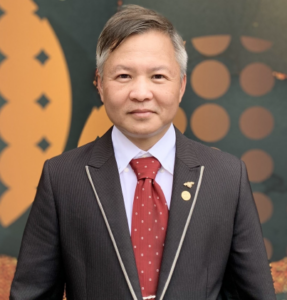
Professor Ying-Hao Chu
Department of Materials Science & Engineering
National Tsing Hua University
yhchu@mx.nthu.edu.tw
Fields of specialty.
- Complex oxide heterostructures, nanostructures, and interfaces for next-generation devices
- Fabrication and characterization of oxide mesocrystals
- High-entropy functional materials
- Flexible and transparent oxide electronics — MICAtronics
- Oxide electronics for smart windows
Major awards and honors.
- The 69th Academic Award of the Ministry of Education (2025)
- Micron Chair Professor (2025)
- The Materials Research Society – Taiwan Fellow (2024)
- Outstanding Research Award of the National Science & Technology Council (2017&2023)
- Thomson Reuters Highly Cited Researchers (2014, 2016, 2018, 2019)
- The Taiwan Physical Society Outstanding Paper Award (2021)
- The Materials Science Scientific Paper Award, The Materials Research Society – Taiwan (2021)
- Engineering Research Paper Award, Chinese Institute of Engineers (2020)
- The Academia Sinica Research Award for Junior Research Investigators (2018)
- Futuristic Breakthrough Technology Award (2017)
- Young Researcher Award of The Physical Society of Taiwan (2017)
- Wu Ta-You Memorial Award (2017)
- Young Researcher Award of the Materials Research Society Taiwan (2016)
- Young Researcher Award of the Taiwan Vacuum Society (2016)
- Y. Z. Hsu Scientific Paper Award in Nanotechnology (2015)
Unleashing the Potential of van der Waals Heteroepitaxy on Muscovite for Next-Generation Flexible Electronics
The rapid proliferation of flexible, wearable, and transparent electronics has driven a massive demand for high-performance device components. However, the development of such electronics is fundamentally hindered by conventional flexible substrates such as polymers, which suffer from poor thermal tolerance and chemical instability, thereby limiting the integration of high-quality crystalline materials. To overcome these bottlenecks, van der Waals (vdW) heteroepitaxy on muscovite mica—a platform known as “MICAtronics”—has emerged as a revolutionary solution. This plenary talk will explore the fundamental mechanisms and recent breakthroughs of this technology, highlighting three of its most remarkable characteristics.
First, muscovite mica serves as an outstanding flexible substrate with extraordinary environmental stability. When thinned to the micrometer scale, it exhibits excellent mechanical flexibility while retaining high optical transparency, chemical inertness, and extreme thermal stability, capable of withstanding processing temperatures up to 1300 K. These robust properties enable it to withstand harsh fabrication environments that typical polymer substrates cannot withstand.
Second, the vdW heteroepitaxy platform enables the direct epitaxial growth of a wide variety of functional materials. Unlike conventional epitaxy that requires strong chemical bonding and strict lattice matching, vdW epitaxy relies on weak intermolecular forces. This unique growth mechanism significantly relaxes lattice-matching constraints, enabling the epitaxially integrated growth of diverse 3D high-quality functional materials—ranging from transparent conducting oxides and ferroelectrics to semiconductors and magnetic materials—onto the 2D layered mica substrate.
Third, the weak vdW interaction at the film-substrate interface enables effortless mechanical separation. The epitaxial overlayers can be easily peeled off from the mica substrate, mitigating the substrate clamping effect and creating unconstrained, freestanding functional thin films. Crucially, because muscovite cleaves perfectly along its vdW gap without leaving surface dangling bonds, the mechanically separated films exhibit pristine, atomic-level flatness at the interface.
By unifying superior mechanical flexibility, broad material compatibility, and the ability to produce atomically flat freestanding films, van der Waals heteroepitaxy on muscovite provides an unparalleled foundation for soft technology. I look forward to discussing how this platform paves the way for advanced flexible sensors, actuators, and smart electronic systems.
Submit Your Contribution
We invite scholars and researchers to present their latest results, experimental insights and technological developments in this evolving and foundational area of materials science.