
ICSMV 2026
Professor Daniel R. Killelea
- General Information
- Symposia
- Advanced and Quantitative Materials Characterization
- Atomic-Scale Processing, Plasma, and Vacuum
- Biomaterials and Polymers
- Computational and Theoretical Design of Materials and Interfaces
- Luminescence Phenomena: Materials and Applications
- Microelectronics and MEMS
- Nanoestructures
- Semiconductors
- Renewable Energy: Materials and Devices
- Tribology, Surfaces and Interfaces
- Thin Films
- Science Outreach
- Simposio Dr. Muhl
- Simposio Dr. Machorro
- Plenary Lectures
- Committees
- Awards/Grants
- Fees
- Congress Registration
- Abstract Submission
- Sponsors and Exhibit
- Hotel Accomodation 2026
- Calls
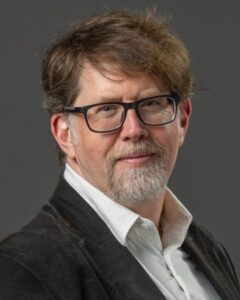
Professor Daniel R. Killelea
DAN KILLELEA is a Professor in the Department of Chemistry & Biochemistry and Associate Dean for Grants in the College of Arts & Sciences at Loyola University Chicago. His research focus is on the chemical properties of metallic surfaces relevant to heterogeneous catalysis. Of particular interest to his research group is how the relationships between the structure and chemistry of metal surfaces evolve upon oxidation and with increasing oxygen incorporation into the near surface region. Such studies inform the larger goal of understanding the mechanisms and dynamics of gas-surface reactions. His group is funded by the NSF, and has active collaborations with other groups at Leiden University in The Netherlands and The University of Göttingen in Germany.
Originally from Milwaukee, Dan received his BS in Chemistry from UW–Milwaukee in 2000. He then moved to Medford, MA for graduate study in Chemistry at Tufts University with Art Utz. In 2007, he received his PhD, and from there, returned to the Midwest for a postdoctoral position at The University of Chicago with Steve Sibener. Dan began his independent career at Loyola in the fall of 2011. Since then, he has been active with the AVS, both national and local (Prairie Chapter). Dan was a co-champion for the Fundamental Discoveries in Heterogeneous Catalysis Focus Topic (HC) starting in 2016. In addition, he was the AVS 66 overall Program vice-Chair in 2019 and the AVS 67 Program Chair. Although AVS 67 was transformed due to CoVID, a showcase was held in 2020 and a virtual AVS 67 in 2021. He also served on the AVS Board of Directors from 2020– 2022 and became an AVS fellow in 2023. He is currently the secretary/treasurer for the AVS Surface Science Division and the chair of the Internation Interactions Committee.
As Associate Dean for Grants, Dan works with grant holders and submitters in CAS for proposal development and submission, as well as award management by interfacing with the relevant University offices.
Subsurface Oxygen in Heterogeneous Catalysis
Daniel R. Killelea
Department of Chemistry & Biochemistry, Loyola University Chicago, Chicago, IL USA
Heterogeneously catalyzed reactions over transition metal surfaces have attracted much investigation over the years both for their significance in large-scale industrial processes and their mysterious nature on the molecular scale. Despite widespread use there remains a significant gap in our understanding of even the most apparently ‘simple’ heterogeneously catalyzed reactions. The reasons are myriad and fundamentally comes down to the fact that seemingly minor details strongly affect the reaction rate. Our work has focused on how the structure of defects and the presence of subsurface oxygen after the chemistry of transition metal surfaces; using single crystal metals with periodic defects (e.g., known step widths and densities) we probe how step width and geometry influence surface-catalyzed oxidation reactions. Furthermore, the ability to obtain velocity distributions of molecules desorbing from surfaces with both high temporal precision and angular resolution provide newfound insight into both the kinetics and the dynamics of oxidation reactions, recombinative desorption, and subsurface emergence.
I will discuss our observations of the influence of subsurface oxygen on CO oxidation on both Rh(111) and Rh(332) and how the velocity distributions of the product CO2 shifts when Osub is present. I will discuss these observations and their potential impacts in oxidation reactions in heterogeneously catalyzed reactions over transition metal surfaces.
Submit Your Contribution
We invite scholars and researchers to present their latest results, experimental insights and technological developments in this evolving and foundational area of materials science.