
ICSMV 2026
Semiconductor Materials and Sensor Technologies for Harsh Environment Systems
- General Information
- Symposia
- Advanced and Quantitative Materials Characterization
- Atomic-Scale Processing, Plasma, and Vacuum
- Biomaterials and Polymers
- Computational and Theoretical Design of Materials and Interfaces
- Luminescence Phenomena: Materials and Applications
- Microelectronics and MEMS
- Nanostructures
- Semiconductors
- Renewable Energy: Materials and Devices
- Tribology, Surfaces and Interfaces
- Science Outreach
- Simposio Dr. Muhl
- Thin Films
- Simposio Dr. Machorro
- General Program
- Agenda
- Poster session
- Plenary Lectures
- Short Courses
- Athletic Race 2026
- Committees
- Awards/Grants
- Fees
- Congress Registration
- Abstract Submission
- Sponsors and Exhibit
- Hotel Accomodation 2026
- Call for Host Institutions
- TOUR CHICHEN ITZÁ
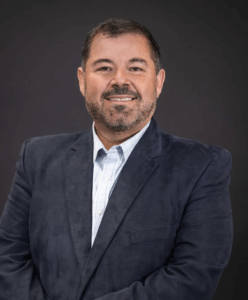
Professor Manuel Quevedo
Department of Materials Science and Engineering, Center for Harsh Environment Semiconductor and Systems (CHESS), The University of Texas at Dallas.
He is Director of the Center for Harsh Environment Semiconductors and Systems. Dr. Quevedo joined UT-Dallas in 2007. Before joining UT-Dallas he worked at Texas Instruments R&D Department where he developed novel materials and devices for Si-based technology. While at Texas Instruments, Dr. Quevedo was appointed Texas Instruments assignee at International Sematech to work with other companies (Intel, IBM, Motorola, Samsung, AMD, etc.) in research related to alternate materials for metal gate and high-k applications. Prof. Quevedo has published more than 400 papers, 3 book chapters, and holds 15 US patents with 6 more pending. His current research includes materials and devices for large area electronics and sensors as well as novel materials for Si-based technology. Dr. Quevedo is member of the scientific board of Nanoholdings LLC and RDUSA LLC, member of the executive board of Contex, the Center for Advanced Materials (Mexico), Center for Applied Chemistry (Mexico), and The Texas Task Force to host the National Semiconductor Tech Center (NSTC). Prof. Quevedo’s research is supported by The National Science Foundation (NSF), The Air Force Office of Sponsored Research (AFOSR), Defense Advanced Research Projects (DARPA), Domestic Nuclear Detection Office (DNDO), Conacyt, Texas Instruments, Department of Homeland Security (DHS) and NanoHoldings LLC.
Semiconductor Materials and Sensor Technologies for Harsh Environment Systems
Reliable operation of electronic systems in extreme environments — high temperature, ionizing radiation, high pressure, and corrosive or high-power conditions — is a persistent bottleneck for applications spanning aerospace, deep-well energy exploration, nuclear instrumentation, and next-generation power electronics. Conventional silicon-based semiconductors and sensors degrade rapidly under these conditions due to intrinsic carrier generation, defect proliferation, and interfacial instability, motivating the development of wide-bandgap (WBG) materials systems — including silicon carbide (SiC), gallium nitride (GaN), and related ultra-wide-bandgap compounds — capable of sustained performance well beyond the limits of conventional technology. This talk presents research from our group and the Center for Harsh Environment Semiconductor and Systems (CHESS) at UT Dallas on the materials science underpinning sensors and electronic devices designed to operate reliably under extreme conditions. We discuss material systems and their integration with emphasis on the structure–property–performance relationships that govern its behavior
Submit Your Contribution
We invite scholars and researchers to present their latest results, experimental insights and technological developments in this evolving and foundational area of materials science.